
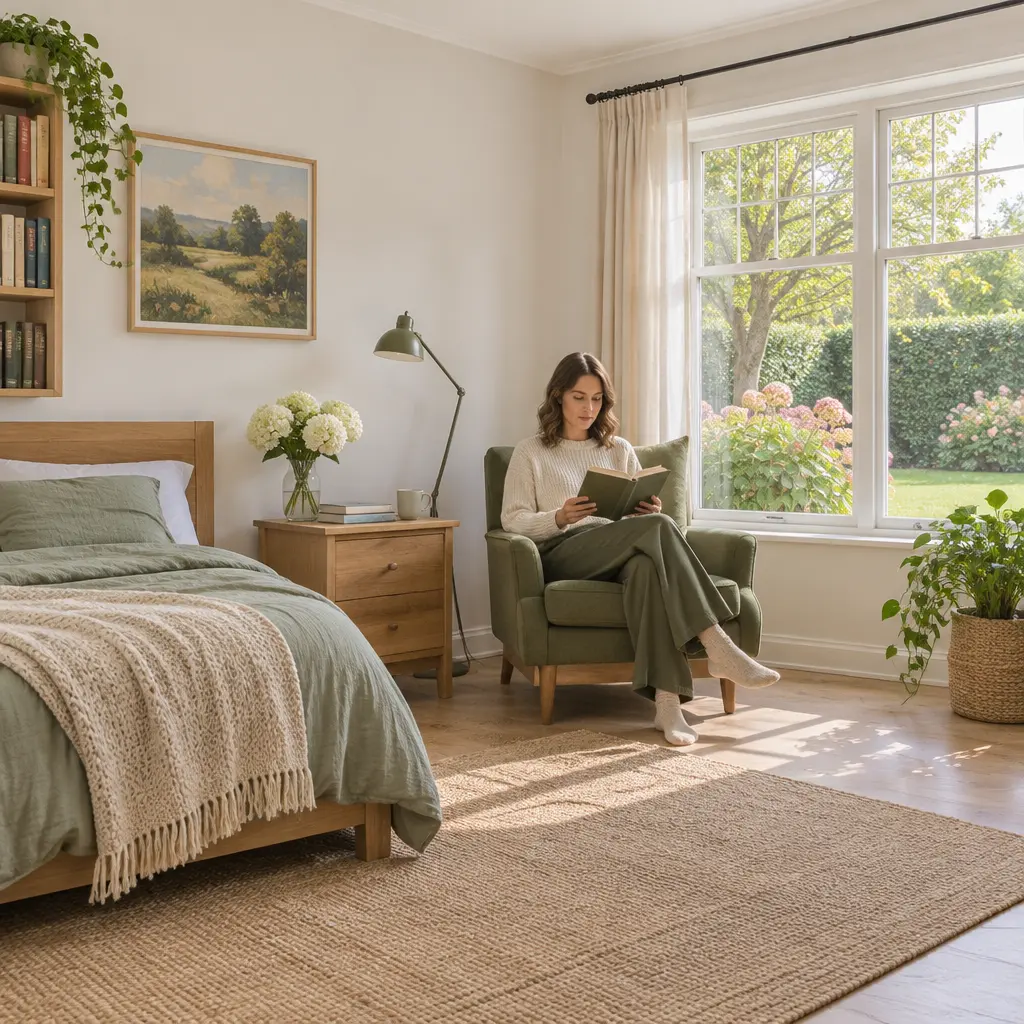
Books to keep on your nightstand are books chosen for easy access during the quiet moments before sleep: a mix of absorbing fiction, calming essays, poetry, and practical nonfiction. The best choices depend on what helps you unwind, rather than on a universal must-read list. That matters because sleep is a major health need: the U.S. Centers for Disease Control and Prevention recommends that adults ages 18–60 get at least seven hours a night. A thoughtful bedside selection can make reading a screen-free wind-down option, provided the material and reading habits suit your sleep. The guide below explains how to choose, offers categories and notable titles, and suggests a simple way to build a useful rotation.
Choosing books to keep on your nightstand
A nightstand book is not a formal literary genre. It is a book selected for the setting and purpose of bedtime reading: convenient to pick up, comfortable to read in short sessions, and compatible with the reader’s evening routine. The National Sleep Foundation recommends a relaxing bedtime routine, while the CDC advises turning off electronic devices at least 30 minutes before bedtime. A print book can fit that routine, although reading itself is not a guaranteed treatment for insomnia.
Useful bedside choices commonly fall into several overlapping categories: short-form writing for easy stopping, familiar or gentle fiction for low-pressure immersion, poetry for brief reflection, and practical nonfiction for readers who prefer a small amount of learning. The right combination depends on whether the goal is calm, pleasure, curiosity, or simply a satisfying end to the day.
Short-form books for easy stopping
Short-form books contain self-contained pieces—such as essays, stories, poems, or brief chapters—that can be finished in one sitting. They suit bedtime because a reader can pause without losing a complex plot or argument. Collections such as The Best American Essays or a favorite volume of short stories make practical choices; for a gentler tone, try Ross Gay’s The Book of Delights, a series of brief reflections on everyday pleasures.
The format is more important than any claim that a particular title induces sleep. A chapter with a natural endpoint can make it easier to put the book down when drowsiness arrives. Readers who tend to stay up for “just one more chapter” may prefer essays, poems, or stories with clear stopping points.
Comforting fiction and familiar rereads
Comfort fiction is fiction a reader finds reassuring, pleasurable, or emotionally manageable. It can include humorous novels, cozy mysteries, gentle romances, or books revisited because their characters and worlds feel familiar. Examples include P. G. Wodehouse’s Jeeves stories, Alexander McCall Smith’s The No. 1 Ladies’ Detective Agency, and a beloved childhood or adult favorite.
“Comforting” is personal: a familiar reread may relax one person, while another prefers a new story. Select a book whose tension level feels appropriate at night. A suspenseful thriller can be an excellent read, but if it leaves you alert or eager to continue, save it for earlier in the day.
Poetry and reflective writing
Poetry and reflective prose offer concentrated language that can be read a few lines at a time. Their brevity makes them suitable for readers who want a quiet pause rather than a long session. Mary Oliver’s Devotions gathers poems attentive to nature and daily life; Naomi Shihab Nye’s work is another accessible place to begin. Choose a collection that invites reflection without making bedtime feel like a homework assignment.
A poem can also serve as a small ritual: read one piece, notice a line that stays with you, and close the book. This is a personal practice, not a medically established sleep intervention, but it can help create a consistent transition from the day to rest.
Matching nightstand books to a bedtime purpose
Once the format is clear, choose titles according to the kind of attention they require. Reading before bed is often recommended as part of a wind-down routine, but evidence should be interpreted carefully. A 2021 randomized study published in the journal Trials compared reading a book in bed with not reading among adults reporting sleep difficulties. The study found a self-reported improvement in sleep quality in the reading group, but it did not establish that every book, reader, or bedtime schedule will produce the same result.
Calming nonfiction and nature writing
Calming nonfiction emphasizes observation, place, craft, or everyday experience rather than urgent problem-solving. Nature writing can be a good fit for readers who enjoy attentive descriptions of landscapes and living things. Try Robin Wall Kimmerer’s Gathering Moss for lyrical natural history, or Annie Dillard’s Pilgrim at Tinker Creek for a more expansive blend of observation and reflection.
Not all nonfiction is relaxing. Work-related advice, intense news, or books that prompt late-night planning may keep the mind active. If a title leads you to reach for your phone or make a to-do list, consider moving it to daytime reading and choosing a less activating book for the bedside.
Light learning and practical reference
A light-learning book offers engaging information in short, independent sections. Popular science, cultural history, and illustrated reference books can satisfy curiosity without requiring a reader to remember a long chain of arguments. Examples include Bill Bryson’s A Short History of Nearly Everything and accessible works on art, food, or the natural world.
For a bedside reference, favor subjects you enjoy rather than material you feel obliged to master. Keep a notepad nearby if an idea needs to be remembered; writing it down can reduce the temptation to pick up a bright-screen device. The CDC’s advice to switch off electronic devices before bedtime supports keeping the routine simple and screen-free where possible.
Books for emotional support and reflection
Reflective books can offer companionship during a demanding period, but their emotional intensity matters. Memoirs, grief writing, and books about personal growth may be meaningful choices; they may also stir strong feelings. Readers should choose based on what feels supportive at night and save difficult material for a time when they have space to process it.
For an approachable reflective option, consider a collection of brief personal essays or a journal with gentle prompts. If persistent worry or sleep difficulty is affecting daily life, a book can be a companion but should not replace appropriate support from a health professional.
Building a practical nightstand reading routine
A useful bedside collection is small, varied, and easy to reach. Rather than stacking a dozen unfinished books, keep two or three options that serve different moods: one short-form collection, one engaging novel, and one calming or reflective title. This makes it easier to choose a book that matches the evening without turning reading into another obligation.
Use a simple three-book rotation
A three-book rotation is a practical selection method, not a research-backed prescription. Keep one book for brief reading, one for immersive pleasure, and one for low-stakes learning or reflection. Replace a title when it becomes frustrating, too stimulating, or simply no longer interesting. The purpose is to make reading inviting and sustainable.
- Short sessions: poetry, essays, or a story collection.
- Comfort and immersion: a familiar reread or a novel with a pace you enjoy.
- Curiosity and calm: nature writing, gentle history, or illustrated nonfiction.
Choose print or e-reader thoughtfully
A print book avoids the notifications and other distractions associated with many phones and tablets. An e-reader may still be convenient, particularly for readers with visual-accessibility needs, but settings and habits matter: use a dim, warm display if available, silence alerts, and avoid switching to social media or email. The CDC’s recommendation to turn off electronic devices at least 30 minutes before bedtime is a useful general benchmark, though individual routines vary.
Make the routine flexible
Bedtime reading should support rest, not become a rule that causes stress. Read for a few minutes if that feels good, stop when sleepy, and move the book if it encourages you to stay awake. The American Academy of Sleep Medicine recommends adults regularly obtain at least seven hours of sleep; the CDC likewise recommends at least seven hours for adults ages 18–60. Reading can be one part of a sleep-supportive routine, alongside a consistent schedule and a comfortable sleep environment.
Conclusion: choose books that make bedtime inviting
Books to keep on your nightstand are best chosen for how they fit your evening, not because a list declares them essential. Short-form writing provides natural stopping points; comforting fiction offers familiar pleasure; poetry creates room for brief reflection; and gentle nonfiction feeds curiosity. Sleep guidance from the CDC and the National Sleep Foundation supports a relaxing, screen-conscious wind-down, while research on bedtime reading offers promising but limited evidence rather than a guarantee.
Start with one book you genuinely want to read, then add a contrasting option for a different mood. Keep the routine flexible, notice whether particular material helps or hinders your ability to settle, and seek professional advice for ongoing sleep problems. A well-chosen nightstand book can make the last part of the day more pleasurable—and may help turn reading into a lasting habit.
Sources: Centers for Disease Control and Prevention, About Sleep, https://www.cdc.gov/sleep/about/index.html; Centers for Disease Control and Prevention, Tips for Better Sleep, https://www.cdc.gov/sleep/about_sleep/sleep_hygiene.html; National Sleep Foundation, Healthy Sleep Tips, https://www.thensf.org/sleep-tips/; A. S. A. Scott et al., “The effects of reading a book in bed on sleep in adults with insomnia symptoms: a randomized controlled trial,” Trials, 2021, https://trialsjournal.biomedcentral.com/articles/10.1186/s13063-021-05417-7; American Academy of Sleep Medicine, “Recommended Amount of Sleep for a Healthy Adult: A Joint Consensus Statement of the American Academy of Sleep Medicine and Sleep Research Society,” https://aasm.org/resources/pdf/sleepdurationrecommendations.pdf.